

EV battery · BESS · power electronics
PC-FR V0 thermoformed insulation parts
Halogen-free, PFAS-free flame-retardant polycarbonate — UL 94 V-0, CTI up to 600 — thermoformed into CCS trays, BESS module insulation, inverter covers, bus-bar barriers and standoff plates. Formed from Shield FR PC sheet we extrude in-house, so grade, gauge and supply are under one roof.
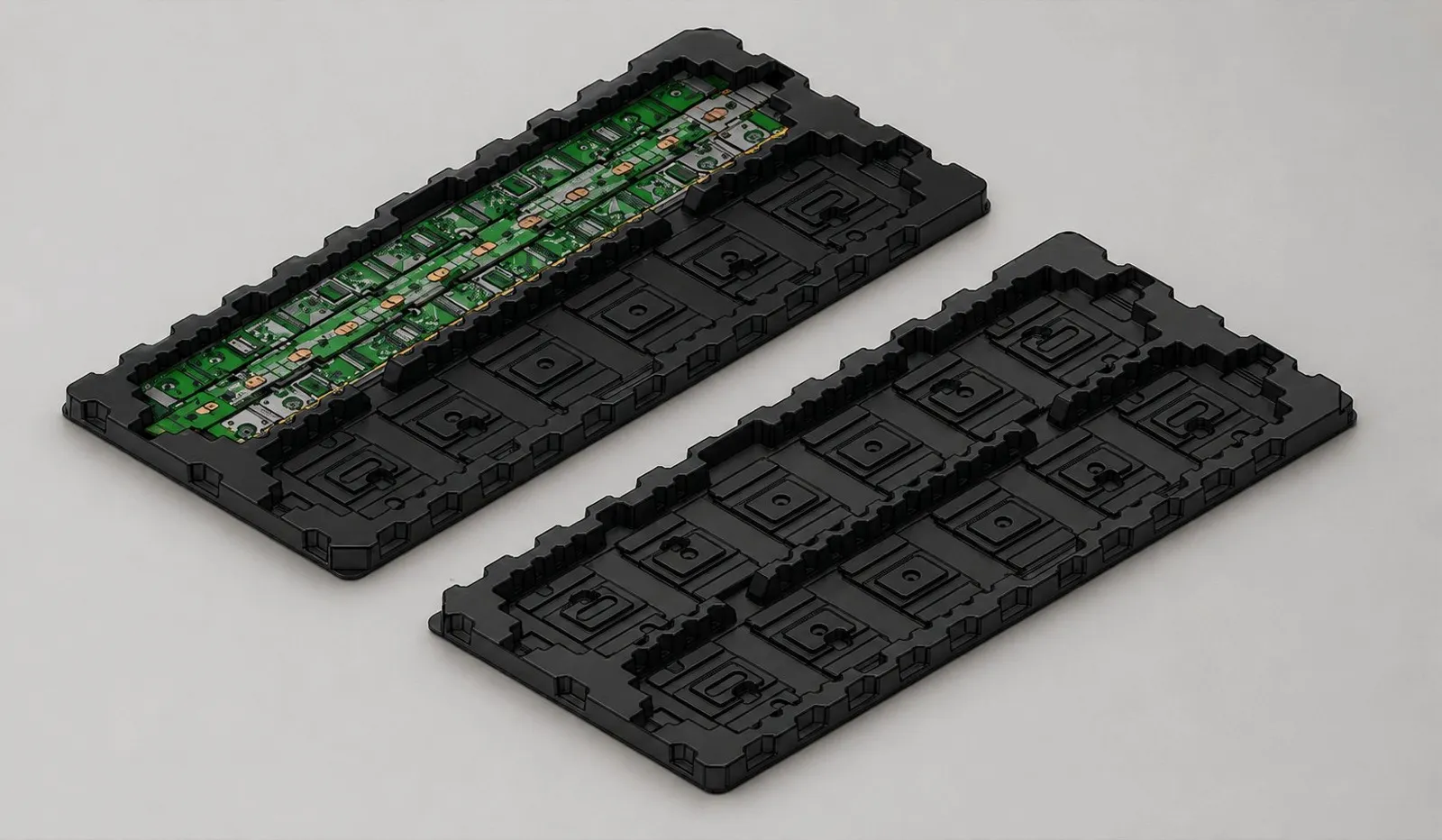
EV packs demand insulation that is thinner, formed & halogen-free
Powertrains and battery packs keep shrinking while voltages rise. Flat insulation and halogenated materials can't follow — thermoformed PC-FR V0 can.
Smaller, thinner equipment
Formed 3-D insulation follows uneven surfaces and shrinks the insulation distance — so inverters, OBCs and DC/DC converters get more compact.
Inverter · OBC · DC/DC converter
Heat dissipation + insulation
A thin formed insulator sits between live conductors and the heat sink — electrical isolation with the shortest possible path to the cooling structure.
Coil · transformer · capacitor · reactor · bus bar
Higher efficiency
Thin insulation between bus bars reduces inductance and copper loss — efficiency won through the insulator, not the copper.
Bus bar · coil · CCS tray
The formula: tracking resistance (CTI up to 600) + thermoformability = miniaturisation, design freedom and a lower assembly part count — insulation that follows the geometry instead of dictating it.
Four grades — pick by voltage class
One shared base resin, four tracking classes. CTI and surface resistivity are the only differences — everything else on the spec sheet is common across the family.
| Grade | Tier | CTI (IEC 60112) | Surface | Choose it for |
|---|---|---|---|---|
| FR PC 175 | Entry | 175 V | > 10¹⁴ Ω/sq | Less demanding insulation |
| FR PC 250 | Standard | 250 V | > 10¹⁴ Ω/sq | Common HV electrical insulation |
| FR PC 600 | Premium | 600 V | > 10¹⁴ Ω/sq | High-voltage battery & inverter — closest creepage |
| FR PC 600-AS | Premium ESD | 600 V | 10¹¹ Ω (static-dissipative) | ESD-safe handling of sensitive PCBA |
UL 94 fire class — all four grades
V-0 from 0.25 mm sheet — self-extinguishes under 10 seconds, no flaming drips. VTM-0 validates the same flame-class chemistry for sub-0.25 mm films.
Why CTI 600 matters at pack voltage
At 400–800 V, surface tracking — carbonised leakage paths across an insulator — is a fire mechanism. CTI 600 (the highest IEC 60112 class) resists tracking at 600 V even when contaminated, letting designers run the closest creepage distances.
What we form in PC-FR V0
CCS trays
Carriers for the cell-contacting PCBA inside EV battery modules — HV isolation directly between bus-bars and cell-tops.
BESS module insulation
Cell-group separators, module liners and cover insulation for stationary storage packs, formed to the module geometry.
Inverter, OBC & DC/DC covers
3-D contoured insulation covers with raised standoffs for component clearance over power PCBAs.
Bus-bar insulation & barriers
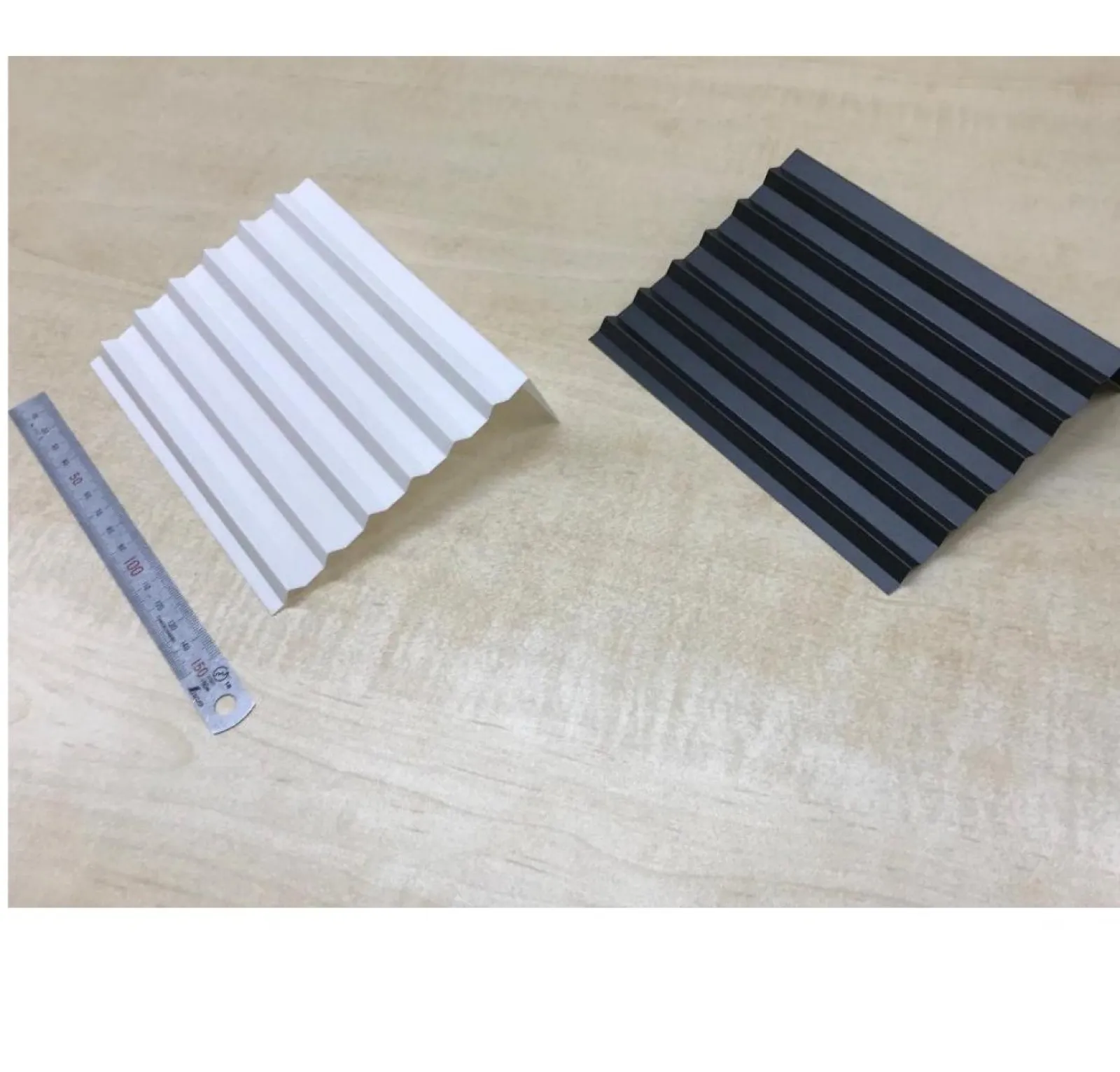
Formed and bent barriers that extend creepage between conductors — including corrugated accordion profiles.
Standoff & separator plates
Multi-pocket vacuum-formed plates that locate components and hold clearance in power electronics.
LiB cell & pack insulation
Thin formed insulation for lithium-ion cells, module walls and pack lids where V-0 fire class is mandatory.
Working on a battery pack or BESS programme?
Send the module drawing or STEP — we reply with grade, gauge, forming route and a costed quote, usually within 24 hours.
CCS trays — cell-contacting system carriers
The CCS tray carries the cell-contacting PCBA inside an EV battery module, sitting directly between the bus-bars and the cell-tops. It has to isolate high voltage, survive inside the pack, locate cells and PCBA precisely — and increasingly, protect the electronics during assembly.
Recommended grade: FR PC 600-AS
CTI 600 for the closest creepage plus a static-dissipative surface (10¹¹ Ω) so the ESD-sensitive PCBA is safe to handle during module assembly.
- HV isolation between bus-bars
- V-0 fire safety inside the pack
- Halogen-free — no toxic smoke
- Formed-in locating features for cells & PCBA
- First-article inspection & HV check per part programme
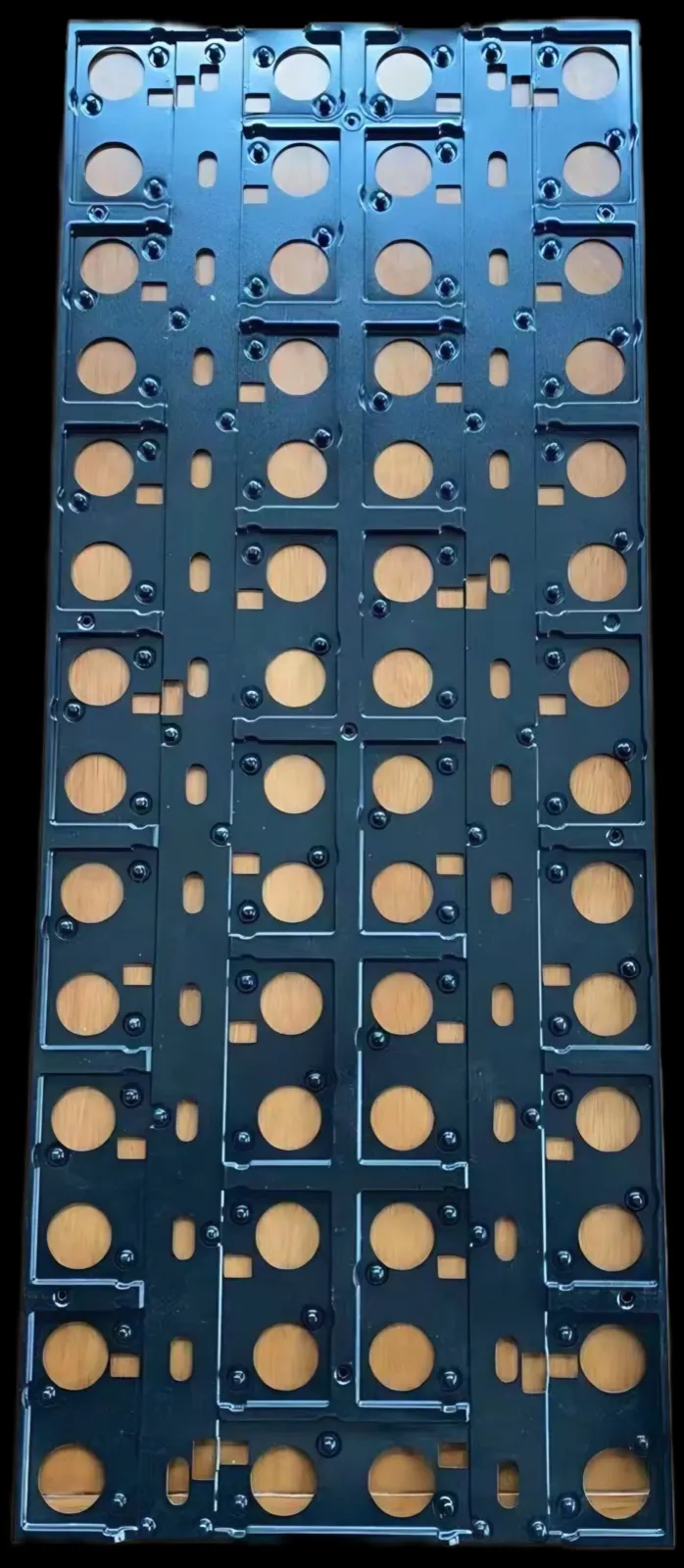
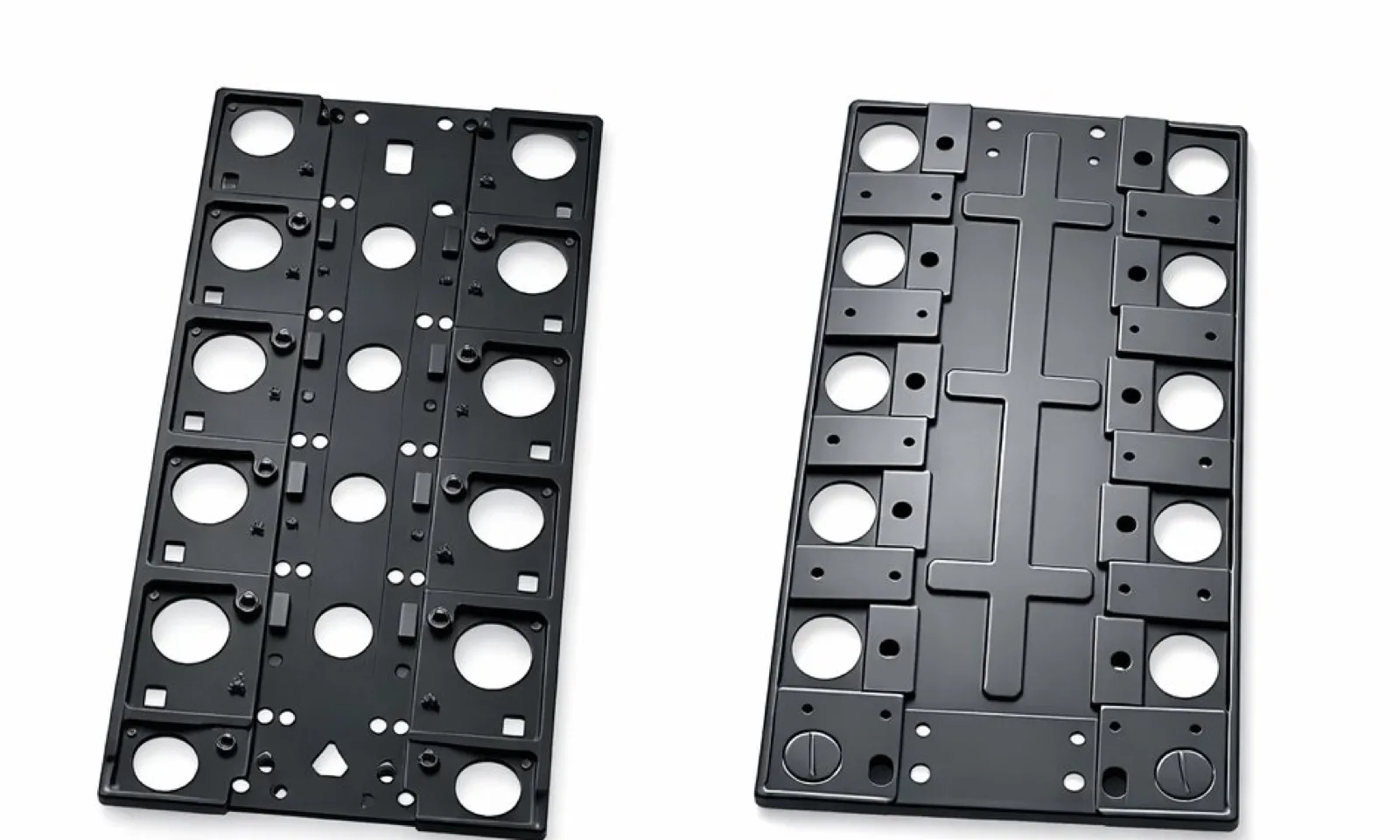
Three fabrication routes
Combined with 5-axis CNC trimming and heat-stake inserts where required — so the insulation part arrives ready to assemble.
Die-cut flat parts
Sheet stamped to outline with internal cutouts — flat insulation pads, gaskets and PCB underlays.
Fast, tooling-light, ideal at volume
V-block line bending
Heated line-bending into L, U, Z and corrugated profiles — folds add mechanical stiffness and extend the creepage path between conductors.
Accordion barriers, folded channels
Vacuum / pressure forming
Full 3-D shapes: clamp → heat → form → cool → trim. Trays, covers, multi-level standoff plates and undercut snap features.
CCS trays, covers, standoff plates
Material properties
Typical values from the StellarEx Shield FR PC datasheet (shared across all four grades unless noted). Not specifications — the full TDS is downloadable.
| Property | Method | Typical value |
|---|---|---|
| CTI (tracking index) | IEC 60112 | 175 / 250 / 600 / 600 V by grade |
| Surface resistivity | IEC 60093 | > 10¹⁴ Ω/sq (600-AS: 10¹¹ Ω, ESD) |
| UL 94 flame class | UL 94 | V-0 (≥ 0.25 mm) · VTM-0 (< 0.25 mm) |
| Halogen content | — | Halogen-free — native FR chemistry, PFAS-free |
| Tensile strength | ISO 527 | 60 MPa |
| Tensile modulus | ISO 527 | 2300 MPa |
| Elongation at break | ISO 527 | > 50% |
| Flexural strength | ISO 178 | 91 MPa |
| Density | ISO 1183 | 1.20 g/cm³ |
| Water absorption | ASTM D570 | < 0.3% |
| Vicat softening | ISO 306 | 138 °C |
| Dielectric strength | IEC 60243 | 38 kV/mm (at 0.5 mm) |
| Dielectric constant | IEC 60250 | ~3.0 |
| Volume resistivity | IEC 60093 | > 10¹⁵ Ω·cm |
| CLTE | ISO 11359 | 5.8 ×10⁻⁵/°C |
Sheet from 0.25 mm film gauges up to 8 mm · black and natural. Download the full TDS →
The sheet is ours too — in-house PC-FR extrusion
Most formers buy FR polycarbonate sheet on the open market and inherit its lead times, gauge variation and minimums. We extrude Shield FR PC on our own StellarEx wide-web lines — which changes what we can promise you.
Gauge, controlled from the pellet
Sheet in 0.1 mm increments from film gauges to 8 mm, measured on-line — the insulation thickness your creepage calculation needs, not the nearest stock size.
Supply that never gates production
No sheet-vendor queue between your PO and your parts. Resin lot → sheet batch → formed part, traceable under one roof.
Colour & surface to spec
Black or natural as standard, matt or gloss; the 600-AS ESD variant with static-dissipative surface is part of the same family.
Moisture handled properly
PC is highly hygroscopic — formed wet it blisters and weakens. Because sheet is extruded and formed under one roof, drying is controlled, not hoped for.
Buying sheet only? We supply Shield FR PC as sheet and film too — plastic sheet extrusion →
Sheet to production part — end to end
DFM & tool design
STEP/2-D review; material grade and gauge selection against your voltage class and creepage geometry.
FRP / aluminium tooling
In-house mould build plus the 5-axis CNC trim fixture — one accountable party.
Prototype
First articles in 2–4 weeks with a dimensional report against your CAD.
Vacuum / pressure forming
Production forming on calibrated lines with zoned heating and stored recipes.
Trim & inserts
5-axis CNC trimming to datums; heat-stake or press-fit inserts where the design needs them.
QC & dispatch
Dimensional, visual and high-voltage checks per agreed inspection plan — with COA/MTC documentation.
QC that matches the application: dimensional and visual checks per your inspection plan, plus high-voltage testing where the part is a safety insulator — with COA, MTC and PPAP-level documentation for automotive programmes.
PC-FR V0 FAQ
What is PC-FR V0?
PC-FR V0 is flame-retardant polycarbonate sheet rated UL 94 V-0 — it self-extinguishes within 10 seconds with no flaming drips. Our Shield FR PC family is halogen-free and PFAS-free, achieves V-0 from 0.25 mm (VTM-0 below that), and thermoforms into 3-D insulation parts for EV battery packs, BESS and power electronics.
What is CTI 600 and why does it matter for EV batteries?
CTI (Comparative Tracking Index, IEC 60112) measures how well an insulating surface resists forming carbonised conductive tracks under voltage and contamination. At EV pack voltages of 400–800 V, tracking is a fire mechanism. CTI 600 is the highest class — it lets designers use the closest creepage distances, which means smaller, lighter insulation parts.
What is a CCS tray?
A cell-contacting system (CCS) tray carries the cell-contacting PCBA inside an EV battery module, sitting directly between the bus-bars and the cell-tops. It needs HV isolation, V-0 fire class, precise locating features for cells and PCBA — and often an ESD-safe surface for assembly. We vacuum-form CCS trays in Shield FR PC, including the 600-AS ESD variant.
Are your PC-FR parts halogen-free?
Yes — the flame-retardant chemistry is natively halogen-free (and PFAS-free), so the material meets current and emerging automotive restrictions and avoids the corrosive, toxic smoke of halogenated FR systems.
Can you supply ESD-safe insulation parts?
Yes. FR PC 600-AS combines CTI 600 with a static-dissipative surface (10¹¹ Ω) so ESD-sensitive PCBAs can be handled and assembled safely on the part.
Do you extrude the PC-FR sheet in-house?
Yes — Shield FR PC sheet is extruded on our own StellarEx lines, so gauge, colour (black or natural) and flatness are controlled from the pellet, and sheet supply never gates your part production. Sheet runs from 0.25 mm film gauges up to 8 mm.
Can you make BESS insulation parts?
Yes — module liners, cell-group separators, cover insulation and bus-bar barriers for stationary storage follow the same materials and processes as EV work, usually with more relaxed geometry and larger formats.
What documentation do you provide?
Material certificates (COA/MTC) to the resin lot, first-article inspection reports against CAD, UL 94 certification per lot, and dimensional + visual + high-voltage checks per your inspection plan. PPAP-level packs are available for automotive programmes.
Related: EV & battery components · polycarbonate thermoforming · electronics & ESD · CCS tray deep-dive article
PC-FR V0 enquiry
Insulating a battery pack, BESS or power converter?
Send the STEP file, voltage class and certification needs — our engineers reply with grade, gauge, forming route and a costed quote, usually within 24 hours.
ISO 9001:2015 certified · Most quotes back within 24 hours