

Skip to content

Metal-to-plastic conversion

Replace metal parts with thermoformed plastic

Fabricated sheet-metal covers and fibreglass panels are heavy, rust-prone, slow to tool and expensive to change. Converting them to thermoformed plastic makes parts lighter, corrosion-free, cheaper to tool and faster to market — often consolidating several metal pieces into one formed part.

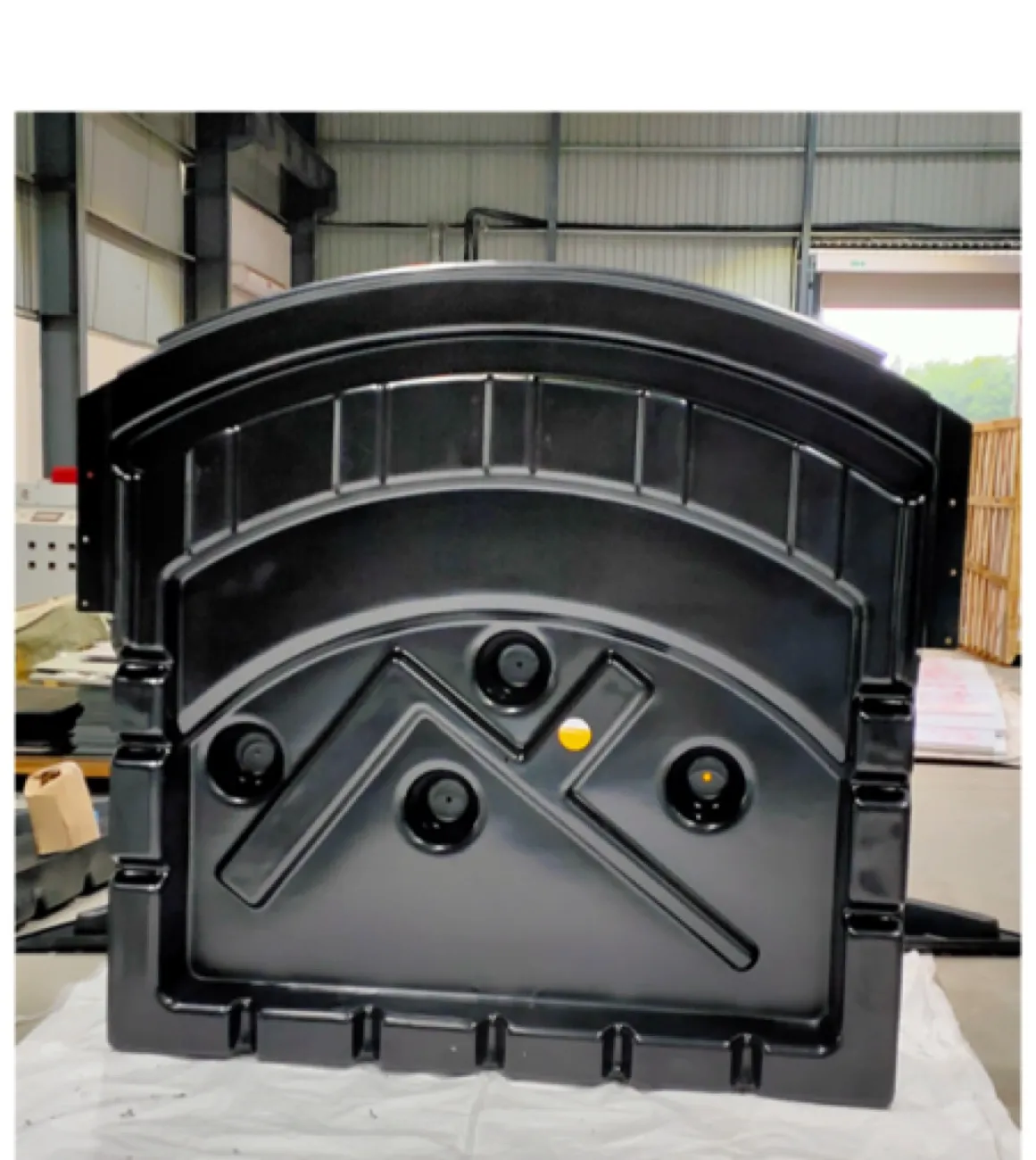
Large thermoformed plastic machine cover that replaces a fabricated sheet-metal enclosure

Why convert metal to plastic?

The wins stack up fast — on cost, weight, corrosion and speed — especially for covers, enclosures and panels at low-to-medium volumes.

Lower tooling cost

Thermoforming tooling is a small fraction of the cost of injection moulds or progressive metal dies — the capital barrier to converting drops sharply.

Lighter parts

Plastic covers and panels weigh far less than steel or aluminium fabrications, cutting shipping, handling and (for vehicles) energy use.

No rust, no corrosion

Thermoformed plastics do not corrode, so parts survive humidity, chemicals and outdoor exposure without paint, plating or galvanising.

No painting step

Colour, texture and finish are formed in from sheet we extrude ourselves — often eliminating a whole paint or powder-coat operation.

Part consolidation

Several welded or fastened metal pieces can become one formed part with features moulded in — fewer parts, less assembly, fewer failure points.

Faster to market

Soft tooling is cut in weeks, not the months a steel die or fabrication fixture needs — and design changes are cheap on soft tools.

What converts well

Some metal parts are ideal for thermoforming; others are better left as they are. Here's the honest split.

Great candidates

  • Sheet-metal covers, guards & enclosures
  • Fabricated or welded housings
  • Fibreglass (FRP) panels & bonnets
  • Formed metal trays & returnable dunnage
  • Fascias, cladding & exterior panels
  • Low-to-medium volume metal parts

Usually leave as-is

  • Small, thick, highly detailed parts
  • Load-bearing structural steel members
  • Parts needing solid sections or threads
  • Very high volumes (injection may win)

Converting fibreglass (FRP / GRP) parts too? See FRP-to-plastic conversion →

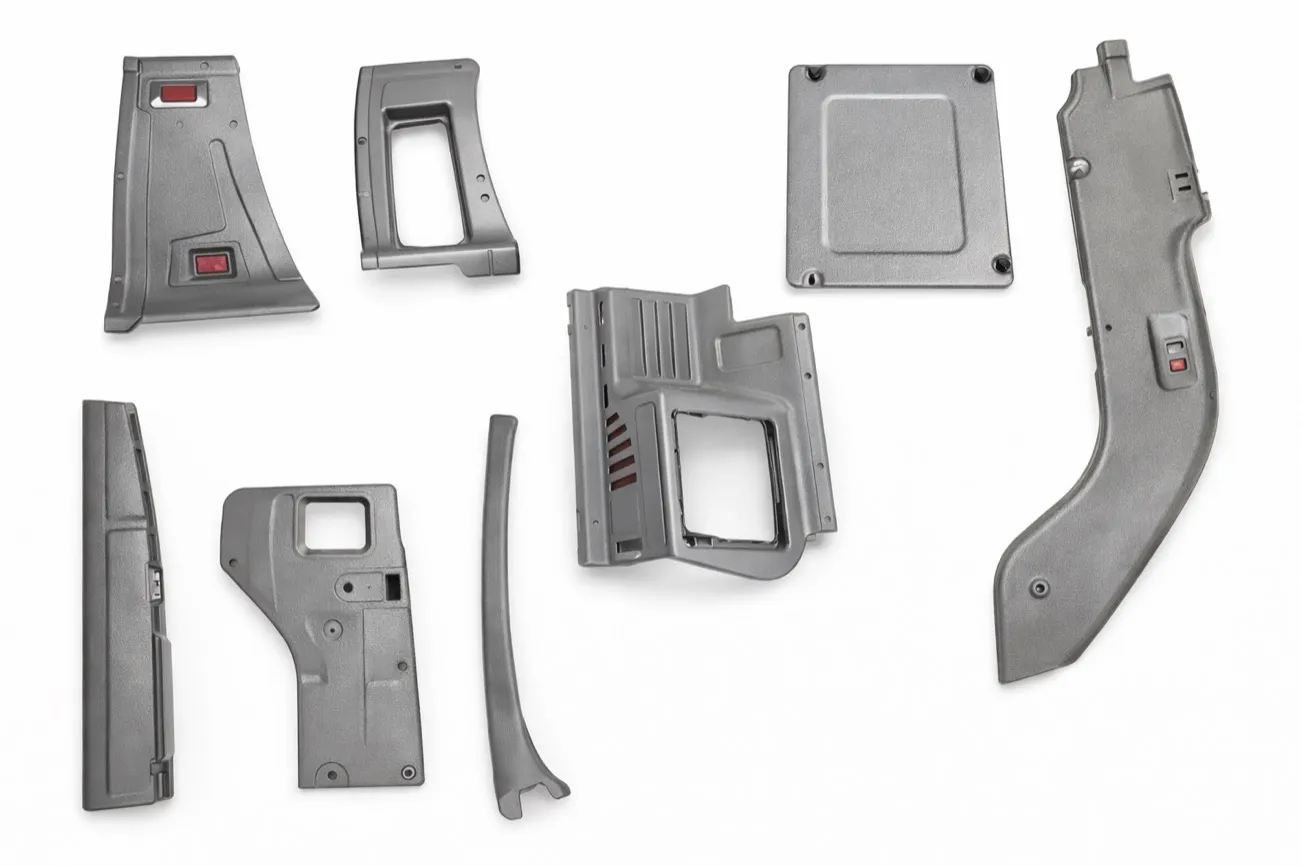
Thermoformed enclosure panels and housings that replace fabricated metal parts
Formed housings and panels with cut-outs and texture — one part each, where metal needed cutting, bending, welding and painting.
Right for your part?

Is thermoforming the right process?

A 30-second gut-check before you send a drawing. When it fits, thermoforming is faster and far cheaper to tool; when it doesn't, we'll tell you.

A strong fit when you have…

  • Large or oversized parts
  • Low-to-medium annual volumes
  • First parts needed in weeks, not months
  • Replacing metal or fibreglass
  • Styling still changing between batches
  • Single-wall covers, trays, panels & housings

Injection moulding may win when…

  • Very high annual volumes
  • Small, thick, highly detailed parts
  • Solid sections, ribs, bosses or threads
  • Sharp detail needed on both faces

Not sure which side you're on? That's exactly the DFM call we make for free.

Tooling cost
A small fraction of an injection mould
Volume sweet spot
Low-to-medium annual runs
First parts
Weeks, not months

Cost and volume shown as typical bands — the exact crossover depends on part size, geometry and volume.

How we convert a part

From your metal drawing to production plastic, with the engineering done up front — the cheapest place to solve problems.

01

DFM review

Send the metal part — a drawing, STEP file or the sample itself. Our engineers assess draw ratio, wall sections, radii and features, and flag what needs to change to form cleanly.

02

Material selection

We match the metal part's job — strength, impact, temperature, FR, UV, chemical or ESD needs — to the right thermoplastic grade, extruded in-house from the pellet.

03

Soft tooling & prototype

Aluminium (or MDF/epoxy for prototypes) tooling is cut in-house on 5-axis CNC. First articles prove form, fit and finish before production commits.

04

Production & finishing

Volume forming, 5-axis CNC trimming, then any secondary work — machining, EMI/RFI shielding, insulation, hardware assembly and packing — under one roof.

Have a metal part in mind?

Send the drawing or the part itself — we'll tell you if it converts, and how much lighter and cheaper it gets.

Materials for conversion

We match the metal part's job to the right grade — and extrude the sheet ourselves, so strength, colour, FR, UV and ESD properties are controlled from the pellet.

ABS & ABS-PMMA

Stiff, tough, cosmetic — the default for converted covers, housings and panels.

ASA

UV-stable and weatherable for outdoor and exterior metal replacements.

Polycarbonate & PC-FR

High impact and heat resistance, UL 94 V-0 — guards, electrical and battery housings.

HDPE

Chemical and outdoor durability — tanks, covers, dunnage and agricultural parts.

HIPS

Economical liners and internal panels replacing light sheet metal.

FR / ESD grades

Flame-retardant and static-safe options for enclosures with electrical requirements.

Full grade data on the materials & grades page.

Conversions we've run

Anonymised by sector — the engineering is exactly as it ran.

Case snapshotEV & Energy — metal replacement

Charging-station & power-electronics housings

Challenge
A charging-network builder needed weatherable, FR-grade enclosures for EV chargers — produced faster and cheaper than sheet metal as the network scaled across sites.
Solution
Thermoformed housings in UV-stable, flame-retardant grades with formed-in mounting features, sealed seams and colour-matched finishes — tooled in weeks, not months.
Result
A durable, safe, brand-consistent enclosure at a fraction of metal-fabrication cost and lead time — ready to scale.
FR-grade
UL 94 options
Weeks
to first tooling
UV-stable
outdoor-rated
More case studies →
Case snapshotRobotics — fibreglass replacement

Covers for autonomous mobile robots

Challenge
An AMR manufacturer's glass-fibre enclosures were heavy, slow and costly — while needing precise sensor cut-outs, impact resistance and a premium finish.
Solution
ABS-PMMA thermoformed covers with UL 94 FR options, 5-axis CNC-trimmed to tight tolerances with datum-referenced sensor apertures.
Result
A lighter, more cost-effective alternative to glass-fibre, ready for volume, with the premium surface the brand required.
ABS-PMMA
gloss + impact
Lighter
than FRP
UL 94
FR options
More case studies →

Conversion assessment

Think a metal part could be plastic?

Send a drawing, STEP file or the sample itself — our engineers reply with whether it converts, the right grade and tooling approach, and a costed quote, usually within 24 hours.

ISO 9001:2015 certified · Most quotes back within 24 hours